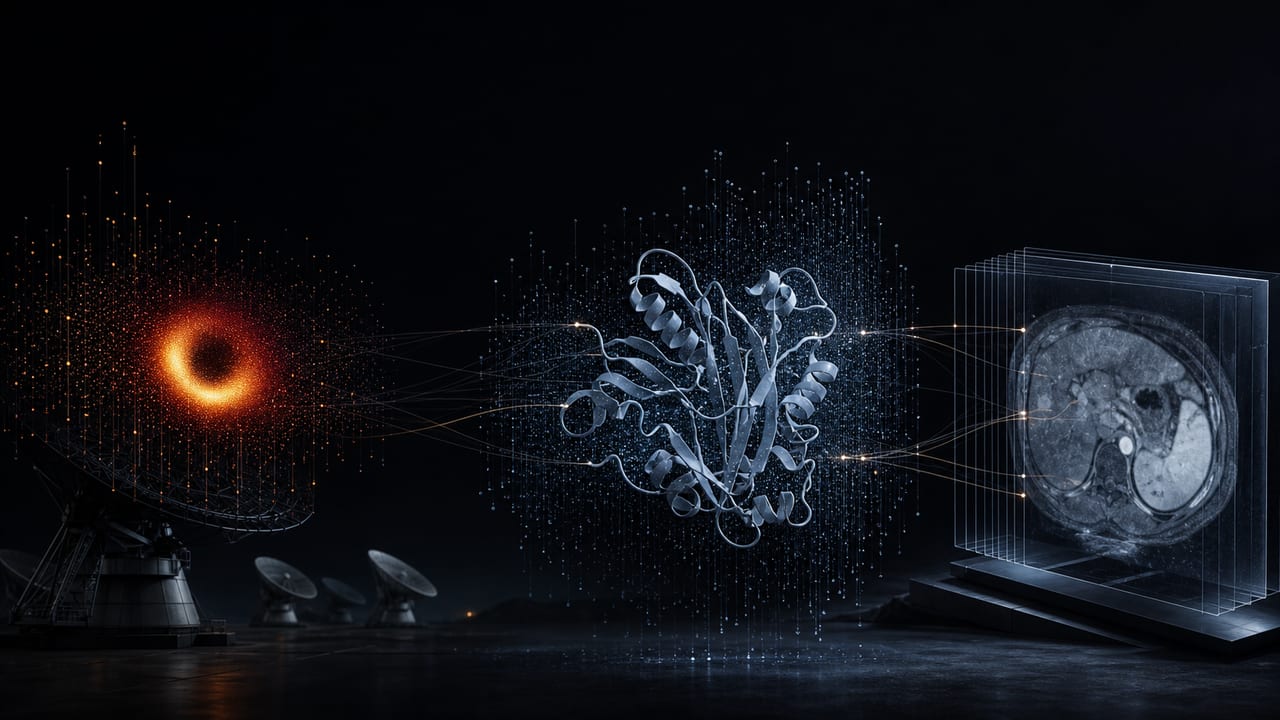
Artificial intelligence is not a single machine that thinks like a person. Most AI systems learn statistical patterns from examples and use those patterns to classify, predict or generate. That narrower description is less theatrical, but more powerful: it explains why one model can help predict a protein’s shape, another can inspect a medical image, and another can translate a sentence.
The same systems can also fail confidently, inherit bias from their data and perform poorly outside the conditions in which they were tested. AI is transforming science and everyday life, but its future is not automatic. It will be shaped by what people choose to build, measure, permit and refuse.
AI extends the scale of patterns people can examine. Used carefully, it can make discovery faster and services more accessible. Used carelessly, it can make opaque decisions faster too.
This is the identical fact set, re-told at a different altitude. Switch any time — the reader keeps your place in the idea, not the prose.